US Strikes Iran: Stunning Third Wave of Attacks


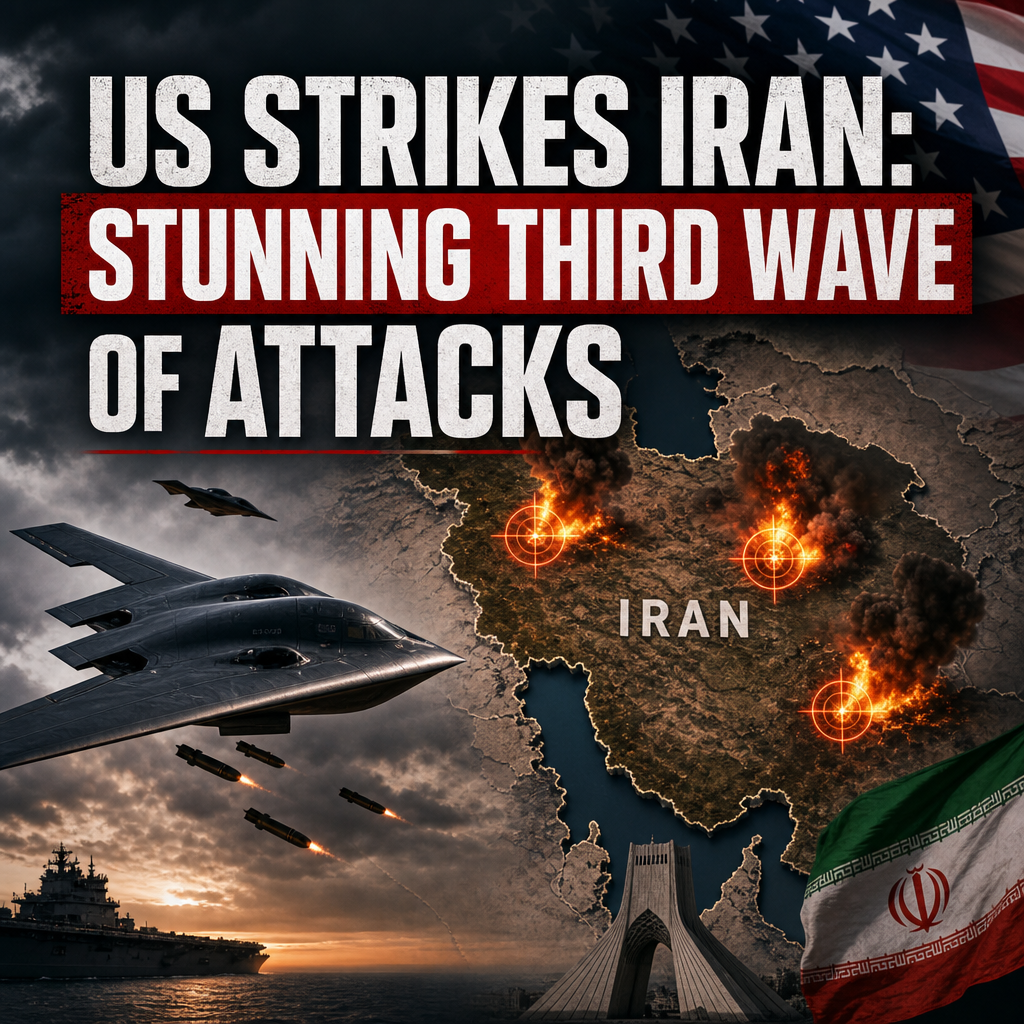
US Strikes Iran have pushed the region into a more dangerous and unpredictable phase, with reports describing a third consecutive night of attacks that widened fears of retaliation, civilian harm, and a broader regional escalation.
The latest wave of strikes has been portrayed very differently depending on the outlet and the political lens through which it is viewed. Some coverage emphasizes the operational scale and the message of deterrence, while other reports focus on the risk of miscalculation, the legal questions around the use of force, and the human cost if the confrontation spreads. Taken together, the picture is not of a clean military outcome, but of a fast-moving crisis with few obvious off-ramps.



US Strikes Iran and the shifting logic of escalation
One of the clearest themes across the reporting is that this is not being treated as an isolated incident. The strikes are being described as part of a sequence, not a single event, and that matters because repeated attacks tend to harden positions on all sides. In that sense, the third wave is politically more significant than a standalone strike: it suggests a campaign, or at least the beginnings of one, rather than a one-off response.
From one perspective, the strikes appear designed to degrade capabilities and signal resolve. Supporters of that approach argue that limited, repeated military action can prevent a larger war by convincing Iran to step back. That logic depends on the belief that showing strength now will deter a more dangerous confrontation later.




But that argument has an obvious weakness: deterrence can just as easily become provocation. When strikes continue over several nights, the chance of a misread response grows. A targeted military message can quickly become a broader exchange if the other side decides it has to answer in a visible way.
What the reporting agrees on
Even with very different editorial angles, the sources broadly converge on a few basic points:
– The strikes were significant enough to draw sustained international attention.
– The situation is still evolving, with no clear indication that the exchange has ended.
– There is real concern about retaliation and spillover beyond the immediate target area.
– Civilian risk, regional instability, and diplomatic fallout are now part of the central story.
That partial agreement is important. It suggests that, while the exact details may vary by outlet, there is a shared recognition that this is not merely a tactical operation. It is a strategic turning point.
Iran’s likely response and the regional stakes
The biggest unanswered question is not what happened during the strikes, but what comes next. Reports and analysis from different outlets point toward several possible responses from Iran or Iran-aligned groups: missile strikes, drone attacks, cyber disruption, pressure through proxy forces, or a slower political retaliation designed to build diplomatic support against Washington.
Iran has long understood that direct retaliation carries risks. A major response could invite a wider US campaign. Yet failing to respond can also be read domestically and regionally as weakness. That tension makes escalation difficult to control once it begins.
This is where the human and geopolitical stakes start to merge. Sky News-style coverage has tended to frame the issue through the lens of regional stability and the possibility of conflict widening across borders. Al Jazeera’s reporting, by contrast, more often highlights the broader political and humanitarian context: how military action affects civilians, how it resonates in the Arab world, and how quickly outside powers can raise the temperature without offering a path to peace. RT’s angle has typically been more critical of US actions, framing them as evidence of Washington’s willingness to use force first and justify later.
Those differing viewpoints matter because they expose the central dilemma. If the strikes are intended to restore deterrence, the strategy may only work if Iran believes the US is prepared to stop. If Iran believes the pressure will continue regardless, then the rational move may be to respond in ways that are costly but short of all-out war.
Why the third wave matters more than the first
A third wave changes the psychology of the crisis in several ways:
1. It makes de-escalation harder. Each strike creates new pressure to answer back.
2. It reduces ambiguity. What might have looked like a warning now looks like a campaign.
3. It raises expectations. Allies, adversaries, and domestic audiences all begin to assume further action is possible.
4. It narrows diplomacy. Talks become harder when each side fears appearing to concede under fire.
That is why the phrase “third wave” is so important. It implies momentum. And in conflicts like this, momentum is often more dangerous than intent.
A fair reading of the evidence
The most balanced conclusion is that neither side appears to have achieved a decisive advantage. The US can point to military action and signaling power, but not necessarily to strategic success. Iran, meanwhile, may gain politically from portraying itself as under attack, but escalation could still damage its security and economy.
What is still unclear is whether the strikes are meant to be limited punishment, a warning shot, or the opening stage of a broader coercive strategy. That ambiguity is not just a media problem; it is part of the geopolitical risk. When major powers act without clearly defining the endpoint, their opponents are left to assume the worst.
For now, the situation demands caution rather than certainty. The strikes have already raised the odds of retaliation, miscalculation, and regional spillover. They may yet be contained, but the balance of reporting suggests a crisis that is becoming harder, not easier, to control.
In practical terms, the next 24 to 72 hours may matter more than the strikes themselves. Any response from Iran, its allies, or affected states will reveal whether this remains a contained confrontation or becomes something much larger. Until then, the most honest assessment is also the least satisfying: the situation is serious, fluid, and still wide open.